





Real photo + design layers
Usually no- Source
- Real photo retained
- AI change
- Graphic layers only
- Context
- Promotional layout
- Audience
- Low risk of synthetic scene confusion
Create23 resources · EU AI image disclosure
The answer is not simply “AI was used”. Explore seven common image workflows and compare where the line changes between ordinary editing, obvious mockups and content that could falsely appear authentic.
Explore the examplesEducational overview, not legal advice. Use the linked EU sources for the official wording.
How to read this guide
A technical AI provenance signal and a legal duty to show a visible disclosure are different questions. Article 50(2) concerns provider-side machine-readable marking. Article 50(4) requires deployers to disclose image, audio or video content when it constitutes a deepfake.
Seven practical cases
Choose a case or use Previous and Next. Each example is interactive and uses the clearest format for the workflow being explained.
Example A
The original photograph stays intact. Text, logo, QR and graphic elements are added on top.
Article 50(2) expressly excludes assistive standard editing or changes that do not substantially alter the input or its semantics from the provider marking duty. For deployer disclosure, the deepfake test still requires a false appearance of authenticity or truthfulness.
Example B
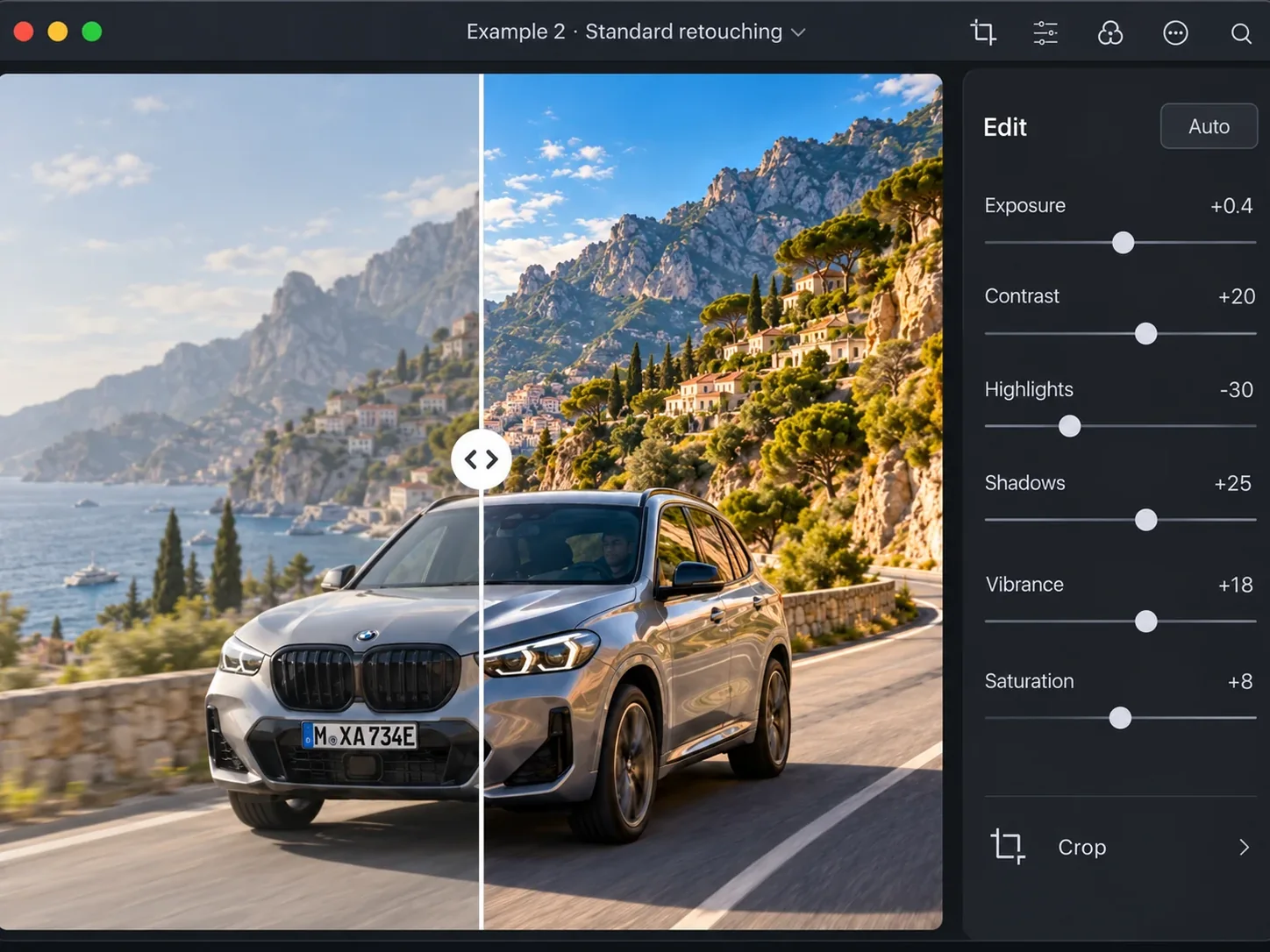
Colour, contrast and cleanup are adjusted. The underlying photograph and its meaning stay the same.
The Commission distinguishes standard editing from substantial alteration. The key deployer question remains whether the result constitutes a deepfake that could falsely appear authentic or truthful.
Example C
The original scene is re-rendered, but the final use clearly reads as a promotional website or design mockup.
Regenerated pixels alone do not decide the deployer disclosure question. The Commission says deployment context, substantive message and audience expectations are relevant to whether content can falsely appear authentic or truthful.
Example D
The scene is synthetic, but the presentation makes it look like an authentic photograph documenting a real customer, location or event.
This is close to the Article 3(60) definition: AI-generated content resembling an existing or plausible subject that could falsely appear authentic or truthful. Article 50(4) requires deployers to disclose deepfake content.
Example E
The real product remains the subject, while the environment, location or atmosphere is generated or replaced.
The Commission explicitly notes that AI-generated background scenes are not necessarily deceptive. The question is whether the finished representation could falsely appear to the intended audience as an authentic real-world scene.
Example F
A synthetic laptop and phone are used to demonstrate a website. The image shown inside the interface includes an AI-generated worker.
Context and audience expectations are part of the deepfake assessment. A device mockup may clearly be a demonstration, while synthetic content shown inside it can require a separate assessment if viewers could take it as authentic or truthful.
Example G
A synthetic image presents a real or plausible person as if the commercial scene or testimonial were authentically photographed.
Where the synthetic recreation resembles a real or plausible person and is presented as an authentic testimonial or commercial record, the false-appearance criterion is much more likely to be met.
Compare mode
Choose any two cases. The comparison focuses on what actually changes the Article 50 analysis.
A · Real photo + design layers
D · Re-render presented as real
What changed: the outcome moves from “Usually no” to “Likely yes”. The key difference is usually not simply whether AI created new pixels, but how the synthetic content is represented and what the audience is likely to believe.
Rows that differ between the two casesThe practical takeaway
Regenerating an image with AI does not, by itself, decide whether a visible deployer disclosure is required. The decisive question is whether the content meets the deepfake definition, including whether it could falsely appear authentic or truthful in its real deployment context.
Use this page with AI
The page is structured so a conversational AI can read the cases and official sources. Copy the prompt below, then add this page URL.
Read this page and help me assess my specific image workflow under EU AI Act Article 50. Ask what is real, what AI generated or changed, how the image is presented, and what the intended audience reasonably expects. Separate provider machine-readable marking from my visible deployer disclosure obligation. Use the official EU sources linked on the page and tell me where the answer remains uncertain.
AI context pack
This compact download contains the seven cases, outcome logic, official EU links, page summary and open questions in machine-readable JSON and Markdown.
Official sources
Article 50 applies from 2 August 2026. This page is an educational interpretation of the official materials, not legal advice.
The AI Act Service Desk notes that some displayed provisions may not yet reflect Digital Omnibus amendments. For a legal decision, verify the current consolidated text and applicable national enforcement position.
Quick questions
Educational overview, not legal advice. Use the linked EU sources for the official wording.
No. Technical provenance and the deployer disclosure test are separate. A visible Article 50(4) disclosure is tied to deepfake content, not merely to the presence of an AI provenance signal.
No automatic rule follows from regenerated pixels alone. The final representation, message, deployment context and audience expectations matter to whether the output could falsely appear authentic or truthful.
No. The Commission specifically recognises that generated background scenes may not falsely appear authentic in contexts where the audience expects creative production. A realistic commercial scene can still require a different assessment.
No. It is an educational guide built from official EU sources. For a consequential publication or uncertain case, check the current law and obtain professional legal advice where appropriate.
From answer to action
The resource pages are there to help you make a better decision before the design, shoot or build starts. If the question belongs to an actual Create23 project, bring it into the brief.